Audio Draft Assignment: Snapshots of Photographers

This project was really engaging for me. I had never used Adobe Audition before this assignment, and I like learning new things. I have experiemented with garageband, but it was mostly making music. I was suprised by the similarities between the two.

I decided to create a monologue from an interview focusing on one of my friends who is a portrait photographer. It relates to my topic because it highlights why someone would want to be a portrait photographer, and reflects my own ideas about why portrait photography is such an amazing thing.

I listen to a lot of podcasts. Radiolab, in particular, is one of my favorites. I like how the hosts voice-over narration every once in a while, but mostly just let their guests talk. I wanted to focus on what Noah had to say rather than the questions that I had. I listened to a bunch of Radiolab before making my own audio story.

I wanted to put as much of Noah’s voice in the project as I could. I edited down the footage to make it sound more like a monologue than an interview. I also edited out a few of the pauses. I wanted to make it feel snappy and fast-paced.

I wanted to start off the story with a short audio clip to get the listener to pay attention. I did this by putting the camera sound at the front, and then I recorded some narration audio of myself. After that, I added the full interview with Noah and my voices. I then cut out the audio of myself speaking. I then used the cut tool to delete some of the less relevant bits when Noah spoke.

I recorded all of the audio on my phone except for the camera sound. I found it a free sound website, here. 

When I constructed my project, I used only the cut tool and the zoom in and out tool for more focused editing.

I actually redid this assignment several times. I was using the computers in the dimensions lab at Holland libraries, and it would randomly crash and delete my progress. I ended up coming back a different day to retry it. I’m not sure what was wrong with it, but the computer that I used the second time worked fine.
 

Raw Files Audio Story


Final Logo

Camera-Logo-best-quality
Jotography logo-Created 2019 by Joseph Gardner

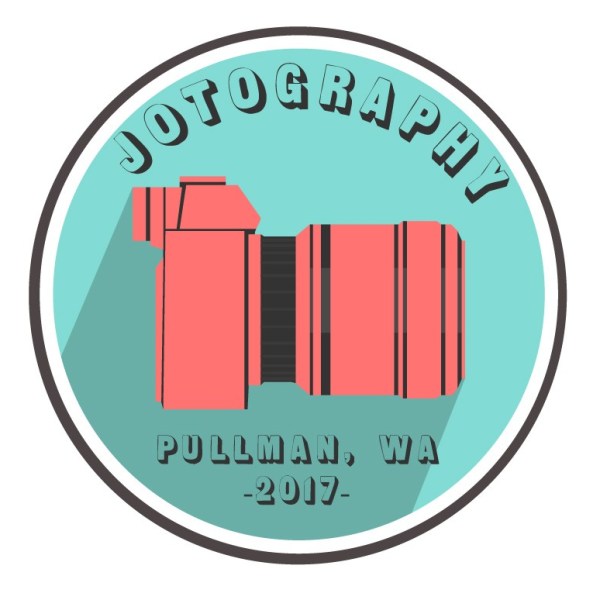
I decided to create a very simplistic camera for this project. The idea relates to my course topic “portrait photography” because it is a very literal interpretation of the subject. It is a camera, and it is how I create my art. I especially focused on the coloration, adding vibrant but contrasting colors to draw the viewer’s eye to the image, and focus on the camera in the center. 

I used minimalism as a design influence. I was inspired by the circular design of a lot of modern logos, such as the Starbucks logo or the logo for Google. They’re both simplistic, use circles and have very few colors. They’re also flat, with no graduation. I researched some modern-day logos, and noticed that a lot of them are circular, such as the logos mentioned. 

For my first draft, I wanted to convey to the viewer that my photography is modern and artistic. I wanted to use a very simple and easily digestible design to show that I am in touch with modern graphic design themes.  A lot of my design utilizes simple colors, with a lot of contrast. I wanted to show this through the use of color in my design. 

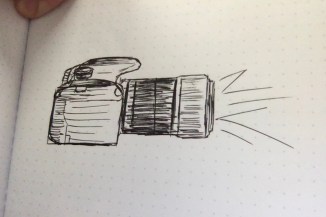
When I went into the project, I didn’t know what I was going to create. I knew that I wanted to convey the fact that it is a photography business, and the easiest way to convey that would be to create a camera. I purposely did not include any sort of text so that the reader would focus on the camera. I then took a picture of a camera, downloaded it from Google, and traced the basic shapes of the camera with the pen tool. I then did this a second time, but I just did it with the outlines of the camera. I then put it behind the red blocks to bring the design together and make it into a more coherent shape. I then created two circles and put them inside of each other. I put that in the background of the camera object. 

I received one piece of feedback, and it said that I should consider adding some text to the body of the logo. I agreed, so I did just that. I used the same technique as the tutorials showed in the cougar logo to create a circular wrapped text. 

I also considered the feedback of changing the colors, experimented with it, and decided to keep them the same as they were before. I like the fact that it draws attention to the camera, so I didn’t change it. It is bright, but it makes the reader notice it. 

I also flipped the camera in my revision. It makes the logo look more progressive, because it’s facing forward. 

The last thing that I did was to create a shadow on the camera. This just adds a bit more depth to the image. I also added some detail to the body of the camera to create more texture and depth.

I created all of the elements used to create the project. I used the shape tool to create the circles, then I edited the shapes line weight to create variation and make it more pleasing to look at, and changed the color of the circles. I used the pen tool for the entire camera. 

I encountered difficulty with centering everything on the page. The ruler tool helps a lot, and so does the align by tool with the boxes. Using that, I was able to position things a lot easier than it is in Photoshop. I really strongly suggest that students should use similar techniques in positioning things that are supposed to line up or are symmetrical.

I used an image of a Sony a711 for a reference image found at https://www.richmondcamera.com/sony/sony-a7ii-w-28-70-full-frame-mirrorless-camera

Draft Logo

Camera Logo2
This logo is for my photography account, and it was created by Joseph Gardner.

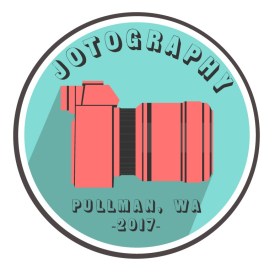
I decided to create a very simplistic camera for this project. The idea relates to my course topic “portrait photography” because it is a very literal interpretation of the subject. It is a camera, and it is how I create my art. I especially focused on the coloration, adding vibrant but contrasting colors to draw the viewer’s eye to the image, and focus on the camera in the center. 

I used minimalism as a design influence. I was inspired by the circular design of a lot of modern logos, such as the Starbucks logo or the logo for Google. They’re both simplistic, use circles and have very few colors. They’re also flat, with no graduation. I researched some modern day logos, and noticed that a lot of them are circular, such as the logos mentioned. 

I want to convey to the viewer that my photography is modern and artistic. I wanted to use a very simple and easily digestible design to show that I am in touch with modern graphic design themes.  A lot of my design utilizes simple colors, with a lot of contrast. I wanted to show this through the use of color in my design. 

When I went into the project, I didn’t know what I was going to create. I knew that I wanted to convey the fact that it is a photography business, and the easiest way to convey that would be to create camera. I purposely did not include any sort of text so that the reader would focus on the camera. I then took a picture of a camera, downloaded it from Google, and traced the basic shapes of the camera with the pen tool. I then did this a second time, but I just did it with the outlines of the camera. I then put it behind the red blocks to bring the design together and make it into a more coherent shape. I then created two circles, and put them inside of each other. I put that in the background of the camera object. 

I created all of the elements used to create the project. I used the shape tool to create the circles, then I edited the shapes line weight to create variation and make it more pleasing to look at, and changed the color of the circles. I used the pen tool for the entire camera. 

I encountered difficulty with centering everything on the page. The ruler tool helps a lot, and so does the align by tool with the boxes. Using that, I was able to position things a lot easier than it is in Photoshop. I really strongly suggest that students should use similar techniques in positioning things that are supposed to line up or are symmetrical.

I used an image of a Sony a711 for a reference image found at https://www.richmondcamera.com/sony/sony-a7ii-w-28-70-full-frame-mirrorless-camera

Blog at WordPress.com.

Up ↑

Design a site like this with WordPress.com
Get started